
Competitive video gaming has evolved from niche LAN parties into a multi-billion dollar industry with stadium-filling tournaments and prize pools exceeding $40 million. Esports now commands viewership numbers rivaling traditional sports, with major championships attracting over 100 million concurrent viewers across streaming platforms. The discipline spans multiple genres—from MOBA and FPS to battle royale and sports simulations—each cultivating distinct competitive ecosystems with franchise leagues, regional qualifiers, and international circuits. In parallel with the growing audience, the esports betting market is also rapidly expanding, with modern platforms like lüks casino offering fans a wide selection of events, high odds, and the opportunity to make real-time match predictions.
Genre Distribution of Global Esports: From MOBA to FPS
The competitive gaming landscape divides into five dominant genre categories. MOBA titles (Multiplayer Online Battle Arena) represent 34% of global esports viewership, led by League of Legends and Dota 2. First-person shooters claim 28% market share through Counter-Strike 2 and Valorant. Team-based tactical shooters including Overwatch account for 15%, while battle royale formats hold 12%. Sports simulation games comprise the remaining 11%.
MOBA tournaments generate 42% of total prize money despite representing 34% of viewership, driven by crowdfunded prize pools. FPS disciplines prioritize franchise stability, with Counter-Strike 2 distributing $18 million across 24 tier-1 tournaments annually. Mobile esports demonstrate rapid growth: Honor of Kings World Championship offered $7.7 million in 2024, marking 210% increase from 2022.
Regional preferences create distinct competitive hierarchies. Asia-Pacific markets favor MOBA and mobile titles, with League of Legends securing 68% viewership in China and South Korea. European audiences gravitate toward FPS—CS2 commands 51% esports viewership across Germany, France, and Poland. North American markets show balanced distribution: 29% FPS, 24% MOBA, 22% sports simulation.
League of Legends Esports Ecosystem and Franchise Leagues
Riot Games operates comprehensive franchise models through continental leagues: LCS (North America), LEC (Europe), and LPL (China), alongside LCK (South Korea). The system features permanent partnership slots—LCS has 10 franchise teams with $10 million entry fees. Each league conducts two seasonal splits culminating in regional playoffs, with top performers advancing to Mid-Season Invitational and World Championship.
LCS teams receive equal shares of league sponsorship revenue—estimated $30-40 million annually divided among 10 organizations. Player salaries average $410,000 in LCS, $380,000 in LEC, and $520,000 in LPL for starting positions. Chinese LPL represents the largest ecosystem with 17 teams and $200 million annual sponsorship revenue.
World Championship draws 24 teams through regional qualification. The 2023 edition generated 6.4 million peak concurrent viewers during finals, with total unique audience reaching 139 million. Prize pool remains publisher-funded at $2.25 million, reflecting Riot’s prioritization of sustainable ecosystem investment. Tournament format spans five weeks across group stage, quarterfinals, semifinals, and finals.
CS2 Discipline: Commercial Success and Tournament Structure
Counter-Strike 2 maintains decentralized competitive ecosystem with multiple independent organizers. The discipline operates without official publisher-run league, relying on ESL Pro League, BLAST Premier, and IEM circuit. This model enables 35-40 tier-1 tournaments annually with combined prize pools exceeding $15 million.
ESL Pro League features 32 partnered teams across four seasonal conferences. Organizations pay partnership fees estimated at $500,000-$750,000 for multi-year participation rights. BLAST Premier operates invitation-based circuit with $2.475 million distributed across three championships. IEM Katowice offers $1 million prize pool and drew 174,000 in-person attendance in 2024.
Player salaries for tier-1 organizations range $15,000-$40,000 monthly, with star players commanding $50,000+ in elite teams. Transfer fees reached $1.2 million for individual acquisitions in 2023. Prize distribution follows standard split: 50% to winner, 28% to runner-up, declining percentages for subsequent placements.
Dota 2 Tournament Model and Prize Pool Formation
Valve Corporation pioneered crowdfunded tournaments through The International, leveraging in-game Battle Pass purchases.
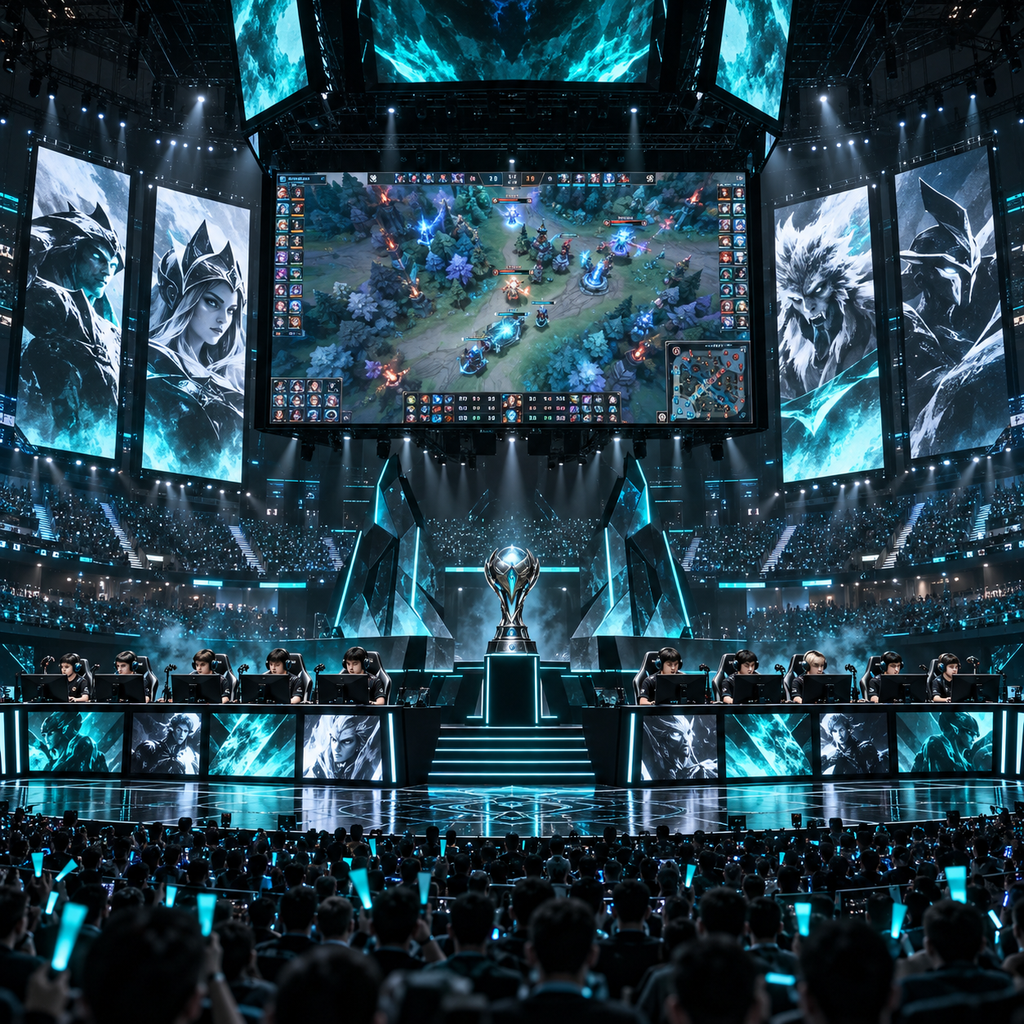
The 2021 edition reached $40,018,400—largest in competitive gaming history—with 25% of Battle Pass revenue directed to prize fund. However, 2023 marked strategic reset as Valve capped crowdfunding at $3 million base guarantee.
Annual Dota Pro Circuit establishes three seasonal tours with regional leagues across six divisions: Western Europe, Eastern Europe, China, Southeast Asia, North America, South America. Each tour awards DPC points determining 12 direct invitations to The International. Division I teams compete for $205,000 per regional tour, while Division II offers $75,000.
Top-tier organizations provide $8,000-$15,000 monthly salaries, but prize money concentration enables elite players to earn $2-5 million annually. Team OG members earned $15 million collectively from back-to-back TI victories in 2018-2019. TI champion receives 45% of total pool, runner-up 13%, incentivizing peak performance at flagship events.
Mobile Esports: Rapid Growth and Audience Reach
Mobile competitive gaming represents fastest-growing segment, projected to reach $2.1 billion revenue by 2025. Honor of Kings World Champion Cup 2024 offered $7.7 million prize pool, positioning mobile titles alongside PC disciplines. PUBG Mobile Global Championship distributed $4 million in 2023, while Free Fire World Series 2022 generated 5.4 million peak concurrent viewers.
Asia-Pacific markets account for 73% of mobile esports viewership and 68% of prize money. Honor of Kings dominates Chinese market with 100 million daily active players and KPL league structure. India emerged as critical growth market—Battlegrounds Mobile India tournament circuits draw 8-12 million regional participants annually. Latin America demonstrates strong Free Fire adoption, with Brazil hosting largest regional league offering $500,000 seasonal prize pools.
Competitive integrity requires standardized devices—organizers provide identical smartphones to eliminate hardware advantages. Tournament formats typically feature squad-based competition across battle royale maps or 5v5 MOBA structures. Upcoming mobile tournaments for Q3 2026 include MLBB M6 World Championship ($1.2 million), Arena of Valor International Championship ($800,000), and Call of Duty Mobile World Championship ($2 million).
Ranking: Most Popular Tournaments and Championships by Viewership
League of Legends World Championship 2023 secured first position with 139.8 million unique viewers and 6.4 million peak concurrent audience. Dota 2 The International 2023 ranked second with 63 million total viewers and 3.8 million peak concurrency. Counter-Strike Major Copenhagen 2024 generated 2.1 million peak viewers, representing 38% increase over previous Major.
| Tournament | Peak Viewers (millions) | Total Unique Viewers (millions) | Prize Pool |
|---|---|---|---|
| LoL World Championship 2023 | 6.4 | 139.8 | $2.25 million |
| The International 2023 | 3.8 | 63.0 | $3.0 million |
| Free Fire World Series 2022 | 5.4 | 52.0 | $2.0 million |
| CS2 Major Copenhagen 2024 | 2.1 | 34.7 | $1.25 million |
| Honor of Kings World Cup 2024 | 4.2 | 71.0 | $7.7 million |
| PUBG Mobile Global Championship 2023 | 3.0 | 48.0 | $4.0 million |
| Valorant Champions 2023 | 1.5 | 28.4 | $2.25 million |
Chinese streaming platforms contribute 40-55% of total viewership for League of Legends and Honor of Kings events. Twitch dominates Western markets with 68% share of CS2 and Valorant viewership, while YouTube Gaming captures 24%. Sponsorship valuations correlate with viewership: endemic brands allocate $200,000-$1.5 million for title sponsorship, while non-endemic partners commit $500,000-$3 million for major championships.
2026 Schedule: Major Esports Tournaments Until the End of the Current Year
Q2-Q3 2026 competitive calendar features 47 tier-1 tournaments across major disciplines. ESL Pro League Season 19 runs May 7-June 2 in Malta with $850,000 prize pool. IEM Dallas follows June 18-23 offering $250,000. League of Legends Mid-Season Invitational takes place May 1-19 in Busan, gathering 13 regional champions. LCS Summer Split begins June 7, LEC Summer opens June 10, determining World Championship qualification.
The International 2026 occupies August 15-25 slot in Seattle. Valve confirmed $3 million base prize pool with potential crowdfunding extension. Regional qualifiers conclude July 28, finalizing 20-team participant roster. Overwatch tournaments continue quarterly cadence—OWCS Stage 2 runs June 12-July 7 with regional qualifiers feeding 16-team international finals.
Mobile sector maintains aggressive schedule: PUBG Mobile Pro League Spring concludes May 25, with top teams advancing to Mid-Season Championship June 20-30 in Kuala Lumpur ($1.5 million). Honor of Kings continues KPL Spring Playoffs through May, international invitational scheduled August 8-18. Valorant Champions Tour Stage 2 Masters Bangkok runs June 6-23 before Champions 2026 (August 1-25).
| Date | Tournament | Location | Prize Pool |
|---|---|---|---|
| May 1-19 | LoL Mid-Season Invitational | Busan, South Korea | $250,000 |
| May 7-June 2 | ESL Pro League S19 | Malta | $850,000 |
| June 6-23 | VCT Masters Bangkok | Bangkok, Thailand | $1,000,000 |
| June 18-23 | IEM Dallas | Dallas, USA | $250,000 |
| June 20-30 | PUBG Mobile Mid-Season Championship | Kuala Lumpur, Malaysia | $1,500,000 |
| July 14-28 | Arena of Valor World Cup | Ho Chi Minh, Vietnam | $800,000 |
| August 1-25 | Valorant Champions 2026 | TBD | $2,250,000 |
| August 8-18 | Honor of Kings International Invitational | Shanghai, China | $3,000,000 |
| August 15-25 | The International 2026 | Seattle, USA | $3,000,000+ |
Twitch secured exclusive English-language rights for ESL Counter-Strike events through 2027 ($85 million three-year deal). YouTube Gaming holds Overwatch broadcasting rights. Riot Games maintains multi-platform approach for League of Legends, distributing regional rights across Twitch, YouTube, and local broadcasters—LPL Chinese rights valued at $310 million annually.
FAQ
What defines esports as distinct from casual gaming?
Competitive gaming becomes classified when structured tournaments, standardized rule sets, and prize distribution create formalized competition. Professional players train 8-12 hours daily, organizations provide salaries and coaching infrastructure, and competitions follow regulated formats with anti-cheat enforcement and officiating.
How do esports tournaments generate revenue beyond entry fees?
Tournament organizers monetize through broadcast rights sales ($2-8 million for tier-1 events), venue sponsorships ($200,000-$3 million per championship), in-game cosmetic sales tied to competitions, ticket sales for LAN finals, and merchandise licensing. Most entry-level tournaments operate free-to-enter models.
What career paths exist within professional esports beyond playing?
Competitive gaming industry employs coaches ($45,000-$120,000 annually), analysts ($38,000-$85,000), broadcast talent ($50,000-$200,000 for established personalities), content creators ($35,000-$90,000), team managers ($42,000-$95,000), and tournament administrators ($40,000-$110,000). Organizations also hire sports psychologists, physical trainers, and nutritionists.
Which region dominates competitive gaming viewership in 2026?
Asia-Pacific accounts for 62% of global viewership across all disciplines, led by China’s 438 million individuals who watched competitive gaming content in 2024. South Korea contributes 71% esports awareness among 18-34 demographic. Western markets represent 28% viewership share—North America 14%, Europe 14%.
How do teams qualify for major international championships?
League of Legends awards slots through regional league performance—top teams earn direct invitations based on Championship Points. Counter-Strike combines ESL Pro League standings, regional qualifiers, and BLAST Premier rankings. Dota 2 allocates 12 International slots via DPC points earned through seasonal tours, with remaining spots filled by regional qualifiers.
What equipment standards apply in professional tournament settings?
Organizers mandate specific peripherals: mice with 1000Hz polling rate, mechanical keyboards without macros, monitors certified for 240-360Hz refresh rates, and noise-canceling headsets. Players bring personal peripherals from approved manufacturers but use tournament-provided PCs with standardized components—Intel i9 processors, NVIDIA RTX 4080+ GPUs, 32GB RAM.
How does prize money distribution work within teams?
Distribution follows contractual agreements varying by organization. Standard models allocate 50-70% to player roster split equally among starters, 10-20% to coaching staff, 5-10% retained by organization, and remaining percentage to substitute players. Elite organizations negotiate individual contracts where star players receive higher percentages.